
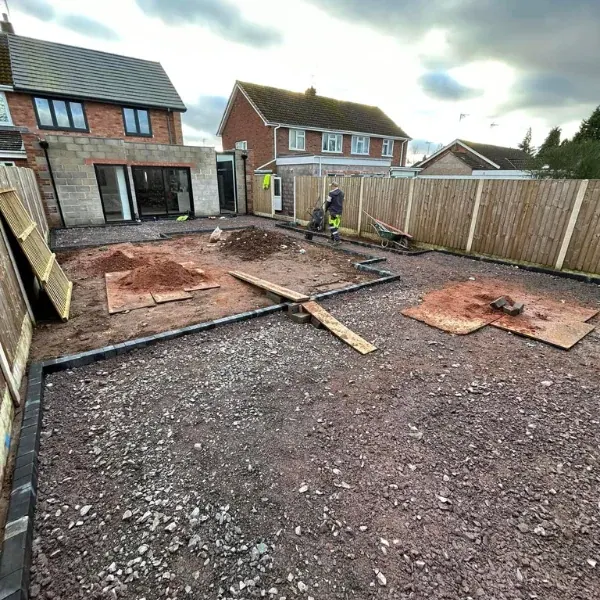
If your extension runs anywhere near the line between you and your neighbour — and in Wolverhampton's semi-detached and terraced streets, most do — there's a piece of paperwork that matters just as much as planning permission and gets talked about far less: the party wall notice.
It isn't complicated once someone explains it properly, and handled early it rarely slows a job down. Here's the plain-English version we give our own customers.
What the Party Wall Act actually is
The Party Wall etc. Act 1996 covers building work that affects a wall or structure you share with a neighbour, a boundary between two properties, or the ground close to a neighbouring building. Its whole purpose is simple: let the neighbour know before the work starts, agree how it will be done, and protect both households if anything goes wrong. It applies across England and Wales, to every street in Wolverhampton included.
The three situations where an extension needs it
- Work on a shared wall — cutting into a party wall to insert beams or flashings, raising it, or underpinning it. Common on terraces and semis, including many double-storey extensions.
- Building at the boundary — a new extension wall built up to, or astride, the line between the two properties.
- Digging near their building — foundations within three metres of a neighbouring structure and deeper than its foundations (and in some cases within six metres).
If none of those apply — a detached house with the extension well inside your own plot — the Act doesn't come into it at all. We confirm which side of that line your project falls on when we quote.
How the process works
- You serve written notice on the neighbour, one to two months before the work starts depending on the type — for work to a shared wall it's two months, so it pays to start early.
- They have 14 days to respond. If they consent in writing, that's usually it — keep the letter safe and build on.
- If they dissent, or don't reply, a surveyor is appointed (one agreed surveyor can act for both sides) to draw up a party wall award — the document that records the condition of the properties and how the work will be carried out.
The award isn't a punishment — it protects you as much as them, because the condition of their property is recorded before you start, which makes any later claim about damage easy to settle with facts rather than arguments.
Talk to your neighbour first — it changes everything
The single best thing you can do costs nothing: knock on the door and explain the plans before any letter lands. A notice that arrives out of the blue reads like a legal threat; the same notice after a friendly conversation is a formality. Most of the extensions we build near a boundary go through on a simple written consent precisely because the neighbour heard about it over a cup of tea first.
What it means for your timeline
The notice periods are the reason to deal with this early: leave it to the last minute and the start date slips through no fault of the build itself. We factor the party wall process into the schedule alongside planning and building control — our guide on how long an extension takes shows where it sits in the sequence. And remember it's entirely separate from planning permission and building regulations — one doesn't cover you for the others.
How we handle it on our jobs
When we quote an extension near a boundary, we tell you straight away whether the Act applies and which notices are needed, help you get them served in good time, and build to the letter of any award. Where a surveyor is needed we'll point you to independent local ones — the Act requires them to act impartially, and that independence protects you. You can see the kind of work we take on across Wolverhampton on our projects page.
Frequently asked questions
What is a party wall agreement?
It's the written agreement between you and your neighbour covering building work that affects a shared wall, a boundary, or the ground close to their property. The formal version — a party wall award drawn up by a surveyor — records how and when the work will be done and protects both sides. It comes from the Party Wall etc. Act 1996, which applies across England and Wales.
Do I need a party wall agreement for my extension?
You'll need to serve notice if your extension involves work to a wall you share with a neighbour, builds a new wall up to or astride the boundary line, or digs foundations within three metres of their building and deeper than their foundations (within six metres in some cases). Plenty of extensions in Wolverhampton's semi-detached and terraced streets tick at least one of those boxes — and plenty of detached plots need none of it. We tell you which applies at the quote stage.
Is a party wall agreement the same as planning permission?
No — they're completely separate. Planning permission is between you and the council; the party wall process is between you and your neighbour. An extension can need both, either or neither, and having one doesn't cover you for the other. Building Regulations are a third, separate approval again.
What happens if I just skip the party wall notice?
Your neighbour can apply to court to stop the work until the process is followed, and any later dispute about damage becomes much harder to resolve in your favour. It can also surface when you sell. Serving notice properly costs little and is far cheaper than a stopped job — so on jobs near a boundary we simply build it into the plan from the start.
Planning an extension near a boundary?
Tell us about the project and we'll tell you exactly what the party wall position is — before anything is committed. Free, no-obligation quotes across Wolverhampton.